

Your problem
Periapical Abscess
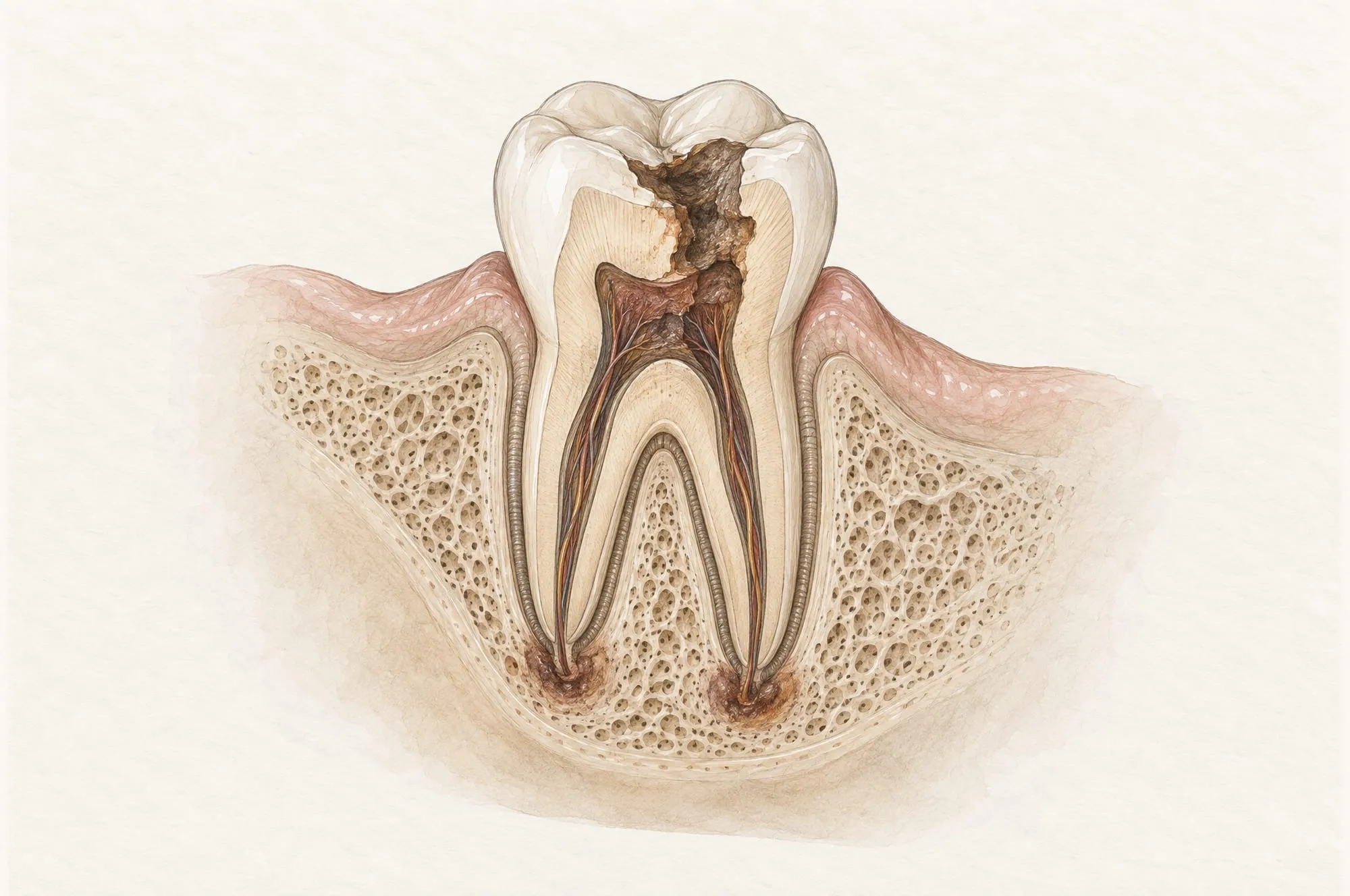
A periapical abscess is an infection around the tip of a tooth root, caused by the nerve inside the tooth having died. It can be treated — often without losing the tooth.
- Charlottenlund
- Jægersborg Allé 45
- 50+ years
A periapical abscess is an infection around the tip of a tooth root, and it occurs because the nerve inside the tooth has died. This most commonly happens when a deep cavity or an old injury has allowed bacteria to reach the nerve. It sounds serious, but it is a condition we treat calmly — and it can often be treated without losing the tooth.
Symptoms of a periapical abscess
A periapical abscess can feel very different from person to person. The most common signs are:
- Throbbing or aching pain in the tooth, which sometimes comes on by itself and can be worst at night
- Tenderness when biting, when you chew or tap lightly on the tooth, and a feeling that the tooth sits a little higher than the others
- Swelling in the gum or the cheek next to the tooth
- A small boil on the gum, where the infection can drain and leave a bad taste in the mouth
- A tooth that turns darker than the teeth next to it
Sometimes a periapical abscess gives no symptoms at all. The infection can lie quietly for years and only be discovered on an X-ray at a routine check-up.
How it develops
Inside the tooth, the nerve is protected. When bacteria penetrate all the way in — through a deep cavity, a knock to the tooth, or a leaking filling — the nerve can die, and the infection spreads outward toward the root tip. The progression can range from an intense, unprovoked pain to a quieter tenderness, and sometimes the infection is first seen on an X-ray.
Typical reasons why the nerve dies are:
- A deep cavity that has not been treated
- An old or leaking filling or crown, where bacteria can seep in along the edge
- A crack or a fracture in the tooth
- A knock to the tooth, including one that happened many years ago
A tooth that has had a root canal treatment before can also become infected again if bacteria have found their way back into the canals.
How we can help
The treatment is a root canal: we clean the tooth’s canals and fill them with a dense material, allowing the infection to resolve and the bone to heal. This takes place under effective anaesthesia and in a calm setting. If the infection cannot be reached from inside, a small procedure at the root tip itself may be the solution. If you are in pain in the meantime, call us. If you call on a weekday before 9:00 am, we will find a time the same day.
This is how a root canal treatment typically works:
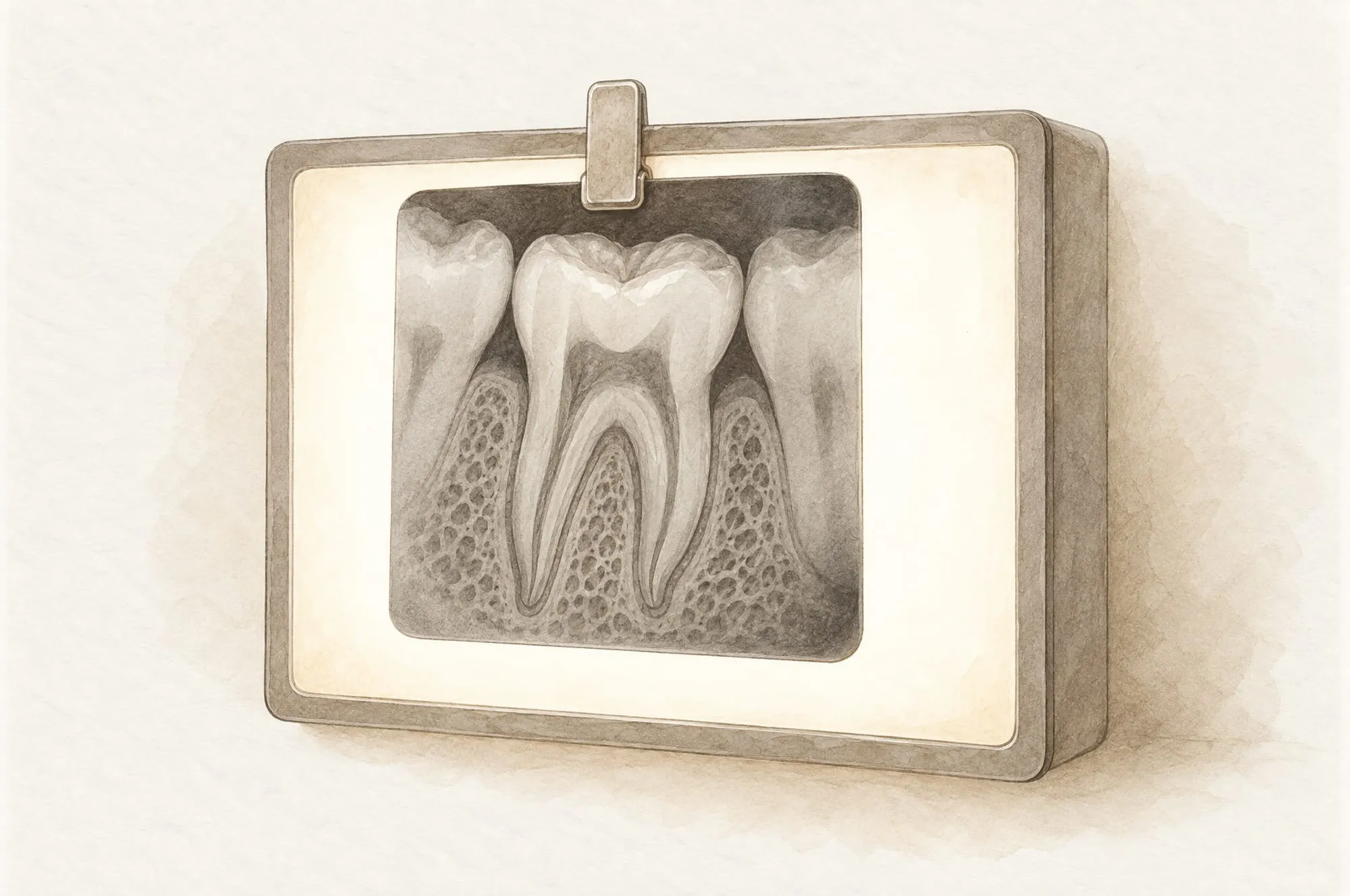
- We examine the tooth and take an X-ray so we can see the infection.
- The tooth is thoroughly anaesthetised.
- The dead nerve is removed, the canals are cleaned, and the tooth is closed temporarily.
- At a later visit, once the tooth has settled, the canals are filled tightly and the tooth is closed for good.
Afterwards, the bone around the root tip heals slowly, and a follow-up X-ray later shows whether the infection has gone. A molar in particular may need a crown at the end, so it is protected against breaking. If an infection does not go away after a root canal treatment, a retrograde root canal treatment, where the root tip is cleaned and sealed directly, may be the next step.
When is a periapical abscess urgent?
Call us as soon as possible if you have:
- Severe, throbbing pain that ordinary painkillers do not ease
- Swelling in the cheek, the gum or under the jaw
- A fever or a feeling of being unwell at the same time as the toothache
If you call on a weekday before 9:00 am, we will find a time the same day. If you find it hard to breathe, call 112. If a swelling spreads towards the eye or the throat, you find it hard to swallow, or you get a fever, call us straight away, and if we are closed, call 1813, the Capital Region’s medical helpline.
Questions & answers
FAQ
Does a periapical abscess always hurt?
Not necessarily. Sometimes it presents as tenderness when chewing or tapping lightly on the tooth, other times as a persistent pain that may worsen with heat or cold. An infection can also be present without obvious signs and only be discovered on an X-ray.
Can the tooth be saved?
Usually yes. With a root canal treatment we clean the canals and seal the tooth, allowing the infection to resolve and the bone to heal. If the infection is in a location we cannot reach from inside, a small surgical procedure at the root tip may be the solution.
Can a periapical abscess go away on its own?
Usually not. The pain may well disappear, but the infection can continue quietly and break down the bone around the root tip. Antibiotics can calm an acute swelling, but they do not remove the bacteria inside the tooth. That is why the cause has to be treated, usually with a root canal treatment.
Is a periapical abscess dangerous?
As a rule, the infection stays in the area around the tooth. If it is left to develop, it can cause an abscess and swelling, and in rare cases spread. That is why it is wise to have the tooth looked at, even if it does not hurt right now.

Book appointment
Ready for a smile you're proud of?
Book an appointment — or call us and we'll find a solution that works for you.
- Jægersborg Allé 45 · 2920 Charlottenlund
- Mon–Wed 08.00 – 16.30